Navigating Food Noise, Eating Disorders, and GLP-1
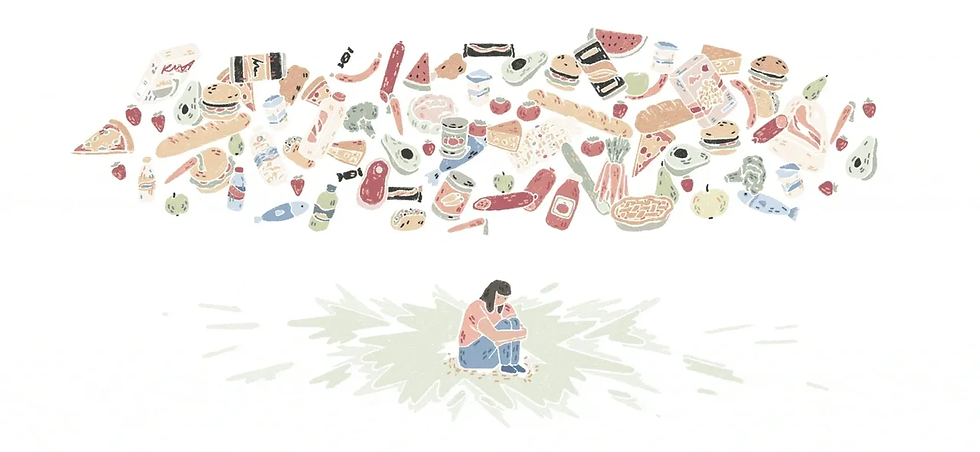
“I just want the food thoughts to stop.” Many of us have heard this from clients—those struggling with binge eating, restriction, or a history of yo-yo dieting. What they’re describing is often referred to as “food noise”—a persistent mental chatter about food, eating, and body image that can feel intrusive, exhausting, and all-consuming.
And now, increasingly, clients are asking about or being prescribed GLP-1 medications (like Ozempic, Wegovy, Mounjaro) as a way to silence that noise. As mental health professionals, we need to understand both the neurobiology and psychology of this phenomenon—especially in the context of disordered eating, trauma-informed care, and emerging weight-loss pharmacology.
What is “Food Noise”?
“Food noise” isn’t a clinical diagnosis but is commonly used to describe:
Constant thoughts about when, what, or how to eat
Preoccupation with weight, calories, or eating “right”
Guilt, shame, or anxiety around food
A persistent internal dialogue driven by control, fear, or comparison
It often shows up in clients with:
Diagnosed eating disorders (AN, BN, BED, ARFID, OSFED)
Chronic dieting or weight cycling
Experiences of trauma or emotional dysregulation
Deep internalised weight stigma or fatphobia
GLP-1 Medications: Silence or Suppression?
GLP-1 receptor agonists were originally developed for Type 2 diabetes, but are now increasingly prescribed for weight loss, often to individuals with binge eating patterns, high body weight, or metabolic concerns. These medications suppress appetite and reduce food-related thoughts, which many describe as a relief.
However, this reduction in food noise can come at a cost:
Disconnecting from internal cues of hunger and fullness
Reinforcing weight-centric goals over emotional and behavioural healing
Triggering or masking eating disorder behaviours, especially restriction
Increased shame or panic if the medication is stopped or weight is regained
Clinical & Ethical Considerations
As clinicians, we are called to hold space for complexity. GLPs may bring genuine relief from food preoccupation, but they can also:
Fuel or prolong eating disorders in vulnerable populations
Reinforce the idea that weight loss = worthiness or success
Create dependency on medication over developing body trust
Be prescribed without adequate ED screening or psychological support
Important Questions to Ask:
“What does peace with food look like for you?”
“What fears do you hold around stopping this medication?”
“Have you noticed changes in your mental health or eating habits since starting it?”
“How might this align (or misalign) with your values around health and recovery?”
Supporting Clients with Food Noise
1. Psychoeducation
Explain how restriction—biological or psychological—fuels obsession with food. Help clients understand how the brain protects us by increasing focus on unmet needs.
The Minnesota Starvation Study illustrates this, as explained by Dulloo (2021), the Duke Department of Psychiatry & Behavioral Sciences (2023), and the InsideOut Institute (2022).
2. Normalize Food Noise in Recovery
Food noise isn’t failure. It’s often a sign of unmet needs—biological hunger, emotional avoidance, safety dysregulation.
3. Practice Interoception and Body Attunement
Help clients reconnect with hunger, fullness, emotions, and sensations. Support them in building body trust, not just body control.
4. Use a Trauma-Informed, Weight-Inclusive Lens
Avoid reinforcing the “thinner is better” narrative. Emphasise body diversity, safety, and compassionate care.
Recommended Australian Resources
Butterfly Foundation
Australia’s national organisation for eating disorders. Offers education, clinical resources, a free helpline, and referral database. 📞 1800 ED HOPE (1800 33 4673) 🔗 butterfly.org.au
InsideOut Institute
Australia’s national institute for research and clinical excellence in eating disorders. Free online training for clinicians. 🎓 insideoutinstitute.org.au
Free Online Modules:
National Eating Disorders Collaboration (NEDC)
Government-funded body providing evidence-based guidelines, workforce training, and clinical tools. 🔍 nedc.com.au
Use NEDC’s online tools to:
Equity and Body Positivity Resources
HAES Australia – haesaustralia.org.au
Fat Studies in Australia – Journals and academic research in critical weight studies
The Mindful Dietitian Podcast – themindfuldietitian.com.au
Suggested Further Reading
For Mental Health Professionals: Eating Disorders, Food Noise & GLP-1 Medications
Food Noise and Intrusive Food Thoughts
Obesity Society. (2024). Development and validation of the Food Noise Questionnaire. Obesity, 32(5), 1057–1065. https://doi.org/10.1002/oby.24216 – A psychometric tool to assess persistent, intrusive food-related thoughts, especially relevant for ED and BED presentations.
GLP-1 Medications and Eating Disorders
Rodgers, R. F., et al. (2025). The impact of glucagon-like peptide-1 (GLP-1) receptor agonists on binge eating disorder: A systematic review. Eating and Weight Disorders – Studies on Anorexia, Bulimia and Obesity. https://doi.org/10.1007/s40519-025-01720-9 – Summarises current evidence for GLP-1 use in BED; highlights both clinical promise and risks.
Schur, E. A., Peterson, C. M., & Ehrlich, E. (2024). GLP-1 receptor agonists: A novel pharmacotherapy for binge eating disorder and bulimia nervosa. Current Psychiatry Reports, 26(2), 45–58. https://doi.org/10.1016/j.cpr.2024.01.004 – Explores the physiological and behavioural outcomes of GLP-1 medications in bulimia and BED populations.
Kahan, S., & Wadden, T. A. (2024). GLP-1 receptor agonists and disordered eating: A clinical perspective. International Journal of Eating Disorders, 57(3), 405–412. https://doi.org/10.1002/eat.24109 – Discusses how GLP-1s intersect with disordered eating, emphasising assessment, monitoring, and ethical prescribing.
Australian Clinical Guidelines and Support Organisations
Butterfly Foundation. (2024). Weight stigma in healthcare: A national priority. https://butterfly.org.au/wp-content/uploads/2024/02/Weight-Stigma-Healthcare-Butterfly-Report.pdf – A policy-focused report on the psychological and health harms of weight stigma in Australian healthcare settings.
National Eating Disorders Collaboration (NEDC). (2024). Eating disorder screening and management toolkit for primary care. https://nedc.com.au – Includes screening tools, referral pathways, and clinical staging guidelines for GPs and allied health professionals.
InsideOut Institute. (2024). Eating Disorders Professional Training Hub. https://insideoutinstitute.org.au – Free online training and clinical resources for mental health practitioners in Australia.
Medical Complications and Body Image
Gaudiani, J. L. (2018). Sick enough: A guide to the medical complications of eating disorders. Routledge. – A foundational clinical text exploring ED risks in all body sizes, relevant in light of emerging pharmacological treatments.
Kite, L., & Kite, L. (2020). More than a body: Your body is an instrument, not an ornament. Houghton Mifflin Harcourt. – A practical resource for clinicians supporting clients with body image distress, relevant to weight-neutral practice.
Final Reflections
GLP-1 medications may offer some clients momentary peace—but no medication can teach self-compassion, body attunement, or trauma integration.
Let’s continue to hold space for nuance:
The food noise is real.
The distress is valid.
But so is the need to heal with, not despite, the body.

References
Butterfly Foundation. (2024). Weight stigma in healthcare: A national priority. https://butterfly.org.au/wp-content/uploads/2024/02/Weight-Stigma-Healthcare-Butterfly-Report.pdf
Duke Department of Psychiatry & Behavioral Sciences. (2023, May 9). The starvation experiment. https://psychiatry.duke.edu/blog/starvation-experiment
Dulloo, A. G. (2021). Physiology of weight regain: Lessons from the classic Minnesota Starvation Experiment on human body composition regulation. Obesity Reviews, 22(Suppl 2), e13189. https://doi.org/10.1111/obr.13189
Gaudiani, J. L. (2018). Sick enough: A guide to the medical complications of eating disorders. Routledge.
InsideOut Institute. (2022, October). The effects of starvation. https://insideoutinstitute.org.au/assets/effects-of-starvation_2022.pdf
InsideOut Institute. (2024). Eating disorders professional training hub. https://insideoutinstitute.org.au
Kahan, S., & Wadden, T. A. (2024). GLP-1 receptor agonists and disordered eating: A clinical perspective. International Journal of Eating Disorders, 57(3), 405–412. https://doi.org/10.1002/eat.24109
Kite, L., & Kite, L. (2020). More than a body: Your body is an instrument, not an ornament. Houghton Mifflin Harcourt.
National Eating Disorders Collaboration. (2024). Eating disorder screening and management toolkit for primary care. https://nedc.com.au
Obesity Society. (2024). Development and validation of the Food Noise Questionnaire. Obesity, 32(5), 1057–1065. https://doi.org/10.1002/oby.24216
Rodgers, R. F., Smith, K. E., & Murray, S. B. (2025). The impact of glucagon-like peptide-1 (GLP-1) receptor agonists on binge eating disorder: A systematic review. Eating and Weight Disorders – Studies on Anorexia, Bulimia and Obesity. Advance online publication. https://doi.org/10.1007/s40519-025-01720-9
Schur, E. A., Peterson, C. M., & Ehrlich, E. (2024). GLP-1 receptor agonists: A novel pharmacotherapy for binge eating disorder and bulimia nervosa. Current Psychiatry Reports, 26(2), 45–58. https://doi.org/10.1016/j.cpr.2024.01.004



Comments